Serving Miami-Dade, Broward & Palm Beach
Part of our access control services.
Doors a building typically controls
- Main lobby and pedestrian gates
- Garage gates and parking entries
- Pool, gym, rooftop, and other amenity doors
- Package rooms and storage areas
- Service and staff entrances
For boards and property managers
Decisions about building access are usually made by a board or management company, and they often involve budgets, votes, and phased rollouts. We can walk the property with you, document each door, and prepare a clear proposal the board can review — including any ongoing software fees.
Combining access control with a video intercom
Many Miami buildings pair lobby access control with a video intercom so residents can let visitors in from their phones. Platforms like ButterflyMX combine both in one system. We can explain how that could work for your building.
Helpful guide
Key fob and phone access for condos: how an upgrade worksAccess control during a power or internet outage
Featured platform
ButterflyMX for Miami buildings
Resident video calls, visitor entry, and management tools in one cloud platform. Learn how it could work for your condo, apartment building, or office.
Read about ButterflyMXAccess control hardware
The hardware behind a controlled door
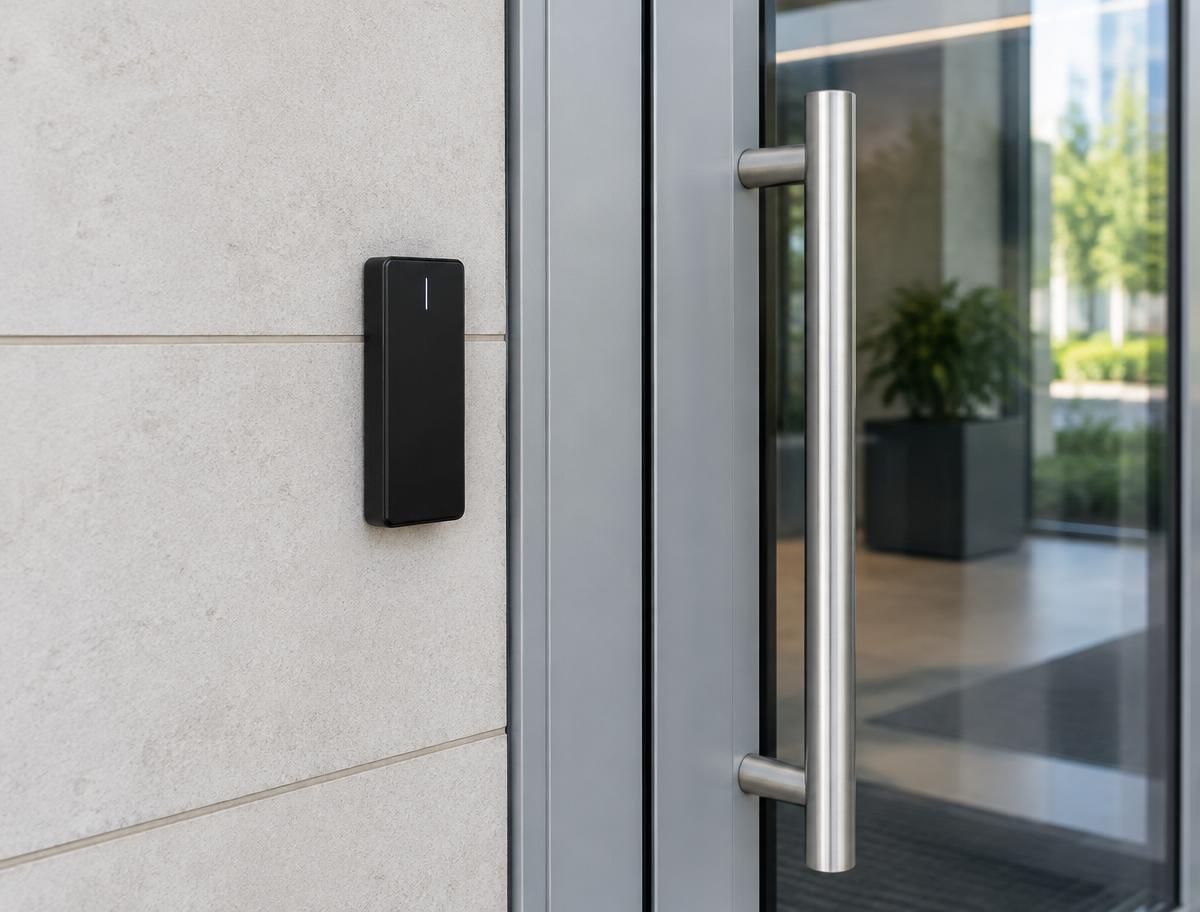
Every controlled door combines a credential reader with locking and exit hardware. We select each piece around the door and frame material, the hardware already installed, available power, and the exit behavior the door must keep — including whether it should stay locked or unlock if power is lost.
Magnetic locks (maglocks)
Hold a door closed with an electromagnet. Common on glass and aluminum doors; require a code-compliant release for free exit.
Electric strikes
Replace the strike plate in the frame so the latch releases on command. Often the least invasive option when the existing lockset can stay.
Electrified panic bars / exit devices
For doors that need push-bar exit, an electrified exit device lets access control unlock the outside while the inside always exits freely.
Push-to-exit / request-to-exit buttons
Let people leave through a door secured by a maglock or strike, and tell the system a valid exit is happening.
Request-to-exit sensors and door-position contacts
Motion sensors detect someone approaching to leave; door contacts report whether the door is actually closed, held, or forced.
Controllers, readers, keypads, power supplies, and wiring
Controllers make the decisions, readers and keypads collect credentials, and dedicated power supplies with backup keep doors behaving predictably.
See how this applies to commercial entry and condo & multifamily buildings.
Property types we work with
Condo associations
High-rise and mid-rise buildings.
Apartment communities
Garden-style and mid-rise rentals.
Townhome communities
Gates and shared amenities.
Mixed-use buildings
Separate residential and commercial access.
How the installation process works
- 01
Walk the property
Document each door, gate, and current system.
- 02
Priorities
Understand the board's goals and budget.
- 03
Proposal
A phased plan with hardware, software, and fees.
- 04
Rollout
Installation, resident onboarding support, and staff training.
Compatibility considerations
Not every product fits every door or property. These are the things we check first:
- Garage gates and existing operators may need specific interfaces.
- Existing wiring may or may not be reusable.
- Resident onboarding matters as much as the hardware.
What to send us
A few details help us check compatibility before we recommend anything:
- Photos of each door, its frame, and the current hardware
- How many doors and roughly how many users need access
- Whether you need schedules, visitor access, or activity records
- Who approves the project (owner, board, or management)
Common questions
- Can we phase the project?
- Yes. Many buildings start with the lobby and garage, then add amenity doors later.
- What happens to residents' existing fobs?
- It depends on whether the new system can read them. Often a switch means issuing new credentials or moving residents to mobile access.